
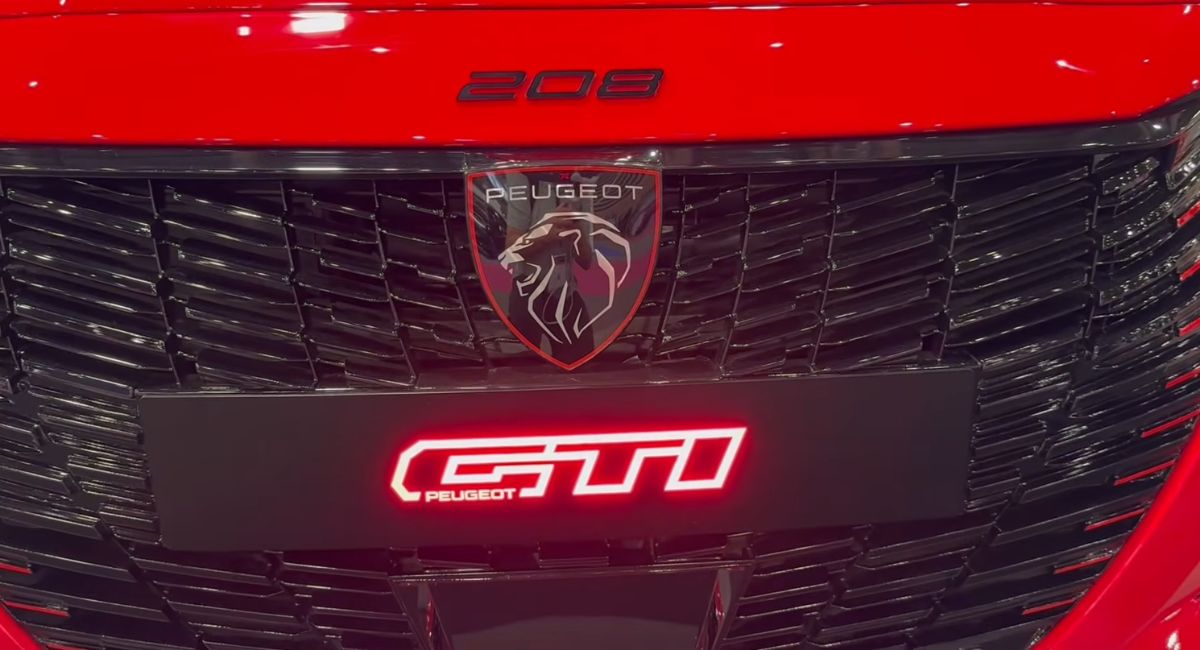
Peugeot has brought the GTi badge back from retirement, and the car wearing it weighs more than 1.5 tonnes, runs on batteries, and makes absolutely no noise from an exhaust. Somewhere, a 205 GTi owner is already furious.
Fair enough. The GTi badge carries serious expectations. Peugeot earned its reputation building hot hatchbacks that could turn an ordinary stretch of road into something worth remembering.
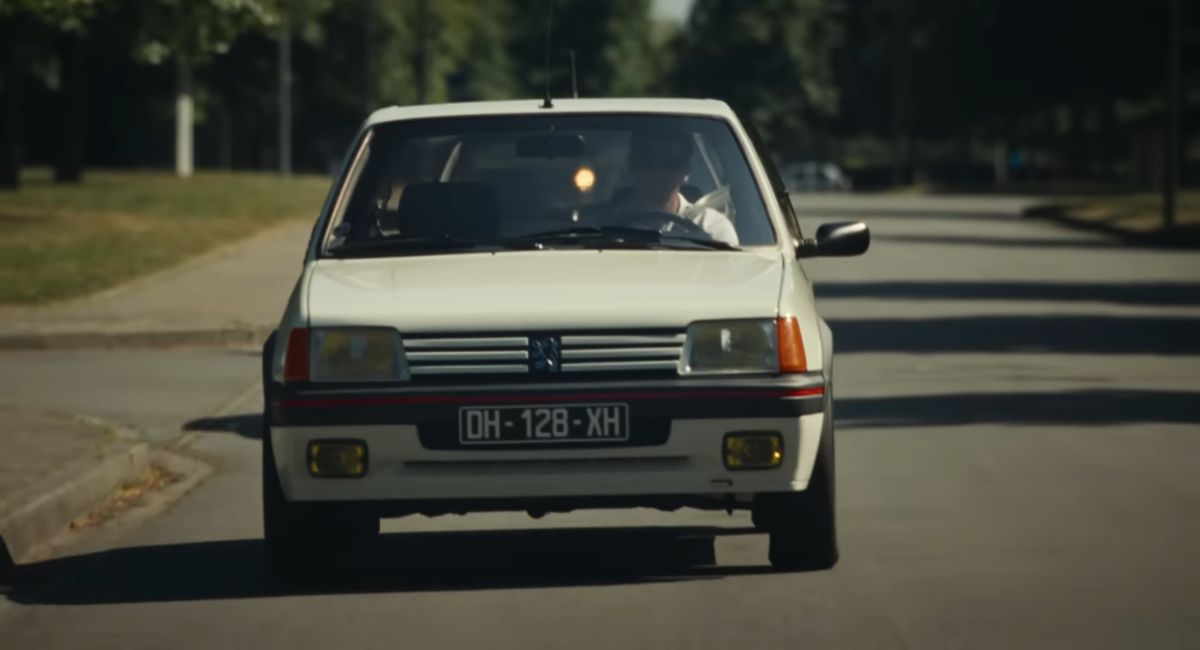
The 205 GTi established the formula, and later models such as the 306 GTi-6 and 208 GTi proved the company still knew how to make a front-wheel-drive car entertaining.
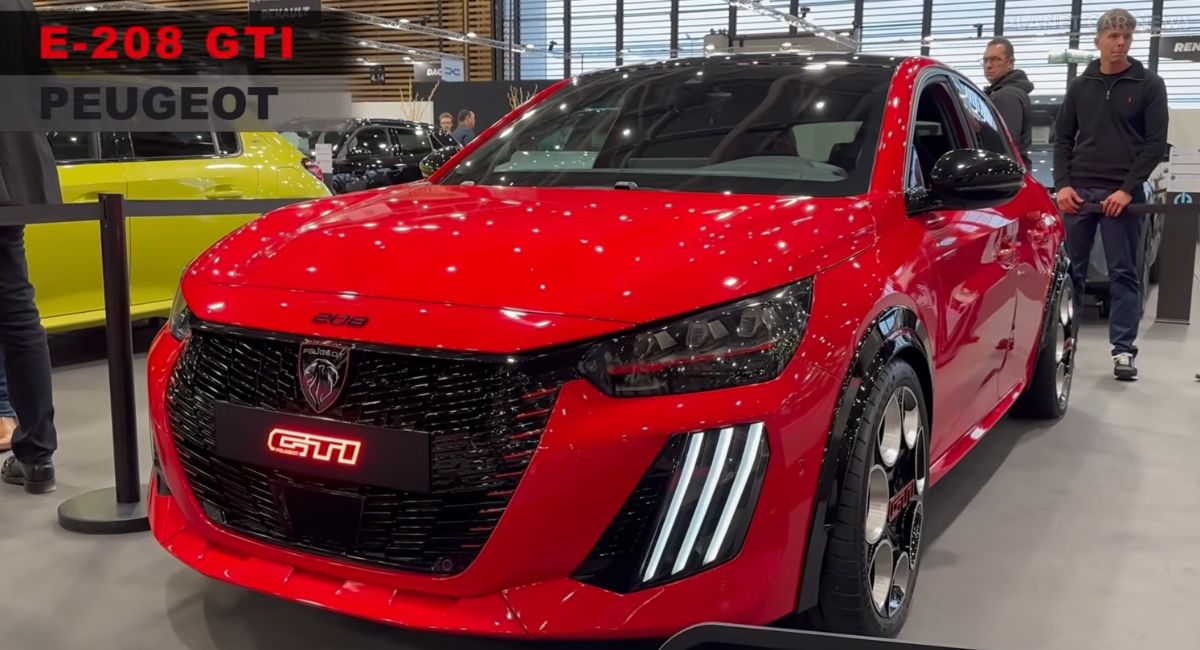
Now Peugeot has handed the responsibility to the E-208 GTi.
The concept appeared at Le Mans in 2025. Peugeot revealed the definitive production version in June 2026, and orders are already open in several European markets.
Peugeot introduced the E-208 GTi at Le Mans in June 2025, marking the return of its legendary performance badge. The official launch video offers a closer look at the electric hot hatchback’s aggressive styling, wider stance, and racing-inspired details.
The important question is whether Peugeot has engineered an electric hatchback deserving of those three letters.
The first signs are encouraging. Very encouraging.
Peugeot Has Given the E-208 GTi Some Serious Firepower
The production E-208 GTi develops 281 PS (277 bhp) and 345 Nm of torque, sending everything through the front wheels.
Peugeot claims 0–100 km/h (62 mph) in 5.5 seconds, with an electronically limited top speed of 180 km/h (112 mph).
For context, the last petrol-powered 208 GTi produced around 200 bhp in its regular form. The electric successor brings substantially more muscle, along with the immediate torque delivery that makes powerful EVs feel so aggressive at everyday speeds.
Here are the key production specifications:
| Specification | Peugeot E-208 GTi |
|---|---|
| Power | 281 PS (277 bhp) |
| Torque | 345 Nm |
| Drivetrain | Front-wheel drive |
| 0–100 km/h | 5.5 seconds |
| Top speed | 180 km/h |
| Battery | 54 kWh gross, 51 kWh usable |
| WLTP range | Up to 375 km (233 miles) |
| Maximum DC charging | 100 kW |
French manufacturers have a history of putting extraordinary performance into unlikely vehicles.
Renault took that idea to its most outrageous extreme with the Renault Espace F1, an 800-horsepower Formula One-powered minivan that could reach 100 km/h in just 2.8 seconds.
The power output gives the Peugeot enough performance to trouble far more expensive machinery on a twisty road.
Instant throttle response should make overtaking effortless, and the modest dimensions help preserve the compact character enthusiasts expect.
However, 345 Nm arriving at the front axle creates a substantial engineering challenge. Managing all that torque while the front wheels handle steering duties requires excellent traction management.
Fortunately, Peugeot appears to have taken that problem seriously.
The Limited-Slip Differential Is the Best News
Buried in the E-208 GTi’s drivetrain is a mechanical limited-slip differential.
That single component makes us considerably more interested in driving it.
A proper limited-slip differential helps distribute torque between the front wheels, improving traction when accelerating through corners. It allows the driver to apply power earlier and makes the car more effective on demanding roads.
Peugeot could have relied entirely on electronic traction management. Instead, its engineers fitted mechanical hardware designed to handle aggressive driving.
The chassis has received equally serious attention.
Peugeot Sport developed a lowered suspension setup with wider tracks, revised steering calibration, and hydraulic bump stops. The front track grows by approximately 56 mm, creating a broader footprint.
The braking system also gets a substantial upgrade, with 355 mm Alcon front discs and four-piston calipers.
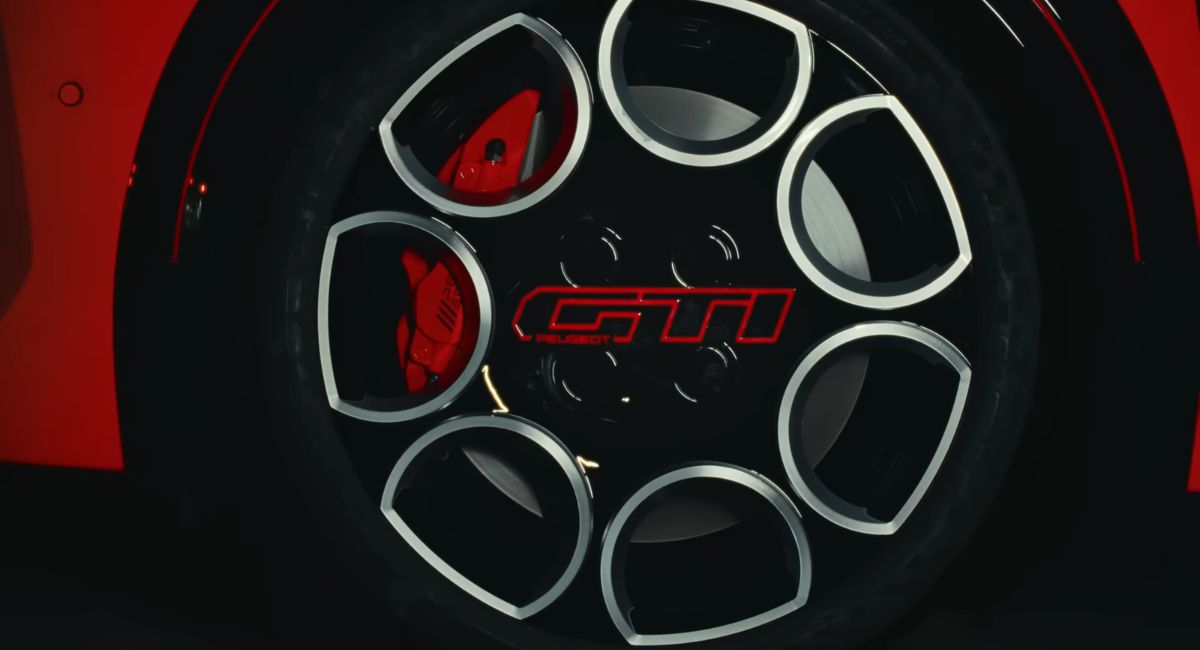
Michelin Pilot Sport 4S tyres provide the necessary grip. According to Peugeot’s official specifications, the production car also uses a high-performance electric motor with a dedicated reduction gearbox.
There’s genuine engineering effort here, and Peugeot deserves credit for it.
We’ve seen enough performance cars relying on aggressive styling and inflated power figures. The E-208 GTi’s chassis specification suggests that Peugeot Sport remembers exactly what made its older hot hatchbacks special.
There Is One Huge Problem: Weight
The E-208 GTi has a published kerb weight of approximately 1,535 kg.
Think about that for a moment.
The original 205 GTi weighed well under a tonne, depending on the version. The electric successor carries hundreds of additional kilograms, largely because modern safety equipment, larger dimensions, and battery technology have completely changed the packaging requirements.
You can engineer around weight. You can install wider tyres, increase spring rates, strengthen brakes, and lower the centre of gravity.
The extra mass still influences the car’s responses.
Direction changes demand more work from the tyres. Braking generates additional heat. A heavy hatchback can feel remarkably composed through a fast bend while losing some of the immediacy that made older GTi models entertaining at ordinary speeds.
Peugeot Sport has clearly worked hard to control the extra kilograms.
The real test is how the E-208 GTi behaves when the driver starts changing direction aggressively.
A great hot hatchback needs to feel alert. It should respond willingly to small steering inputs and allow its driver to adjust the car’s attitude through a corner.
Those qualities matter enormously in a GTi.
Early Road Tests Suggest Peugeot Got the Handling Right
Fortunately, independent reviews are already giving us a useful picture.
In September 2026, Top Gear’s road test praised the E-208 GTi’s eager steering and its ability to pull strongly out of corners using the mechanical differential.
The review also reported occasional torque steer under hard acceleration, a characteristic familiar to anyone who has driven a powerful front-wheel-drive performance car.
Interestingly, Top Gear preferred the steering feel in Normal mode, finding Sport mode unnecessarily heavy.
That’s worth remembering. Artificial steering weight often creates the impression of increased seriousness without providing meaningful additional feedback.
Auto Express also tested the car on wet Scottish roads. Its assessment highlighted strong traction, impressive acceleration, controlled body movement, and a responsive front end.
The brakes received some criticism for their initial response, although stopping power improved with greater pedal pressure.
There’s a clear pattern emerging from the first drives.
The E-208 GTi is quick, capable, and genuinely enjoyable through corners. Its performance hardware appears to work exactly as intended.
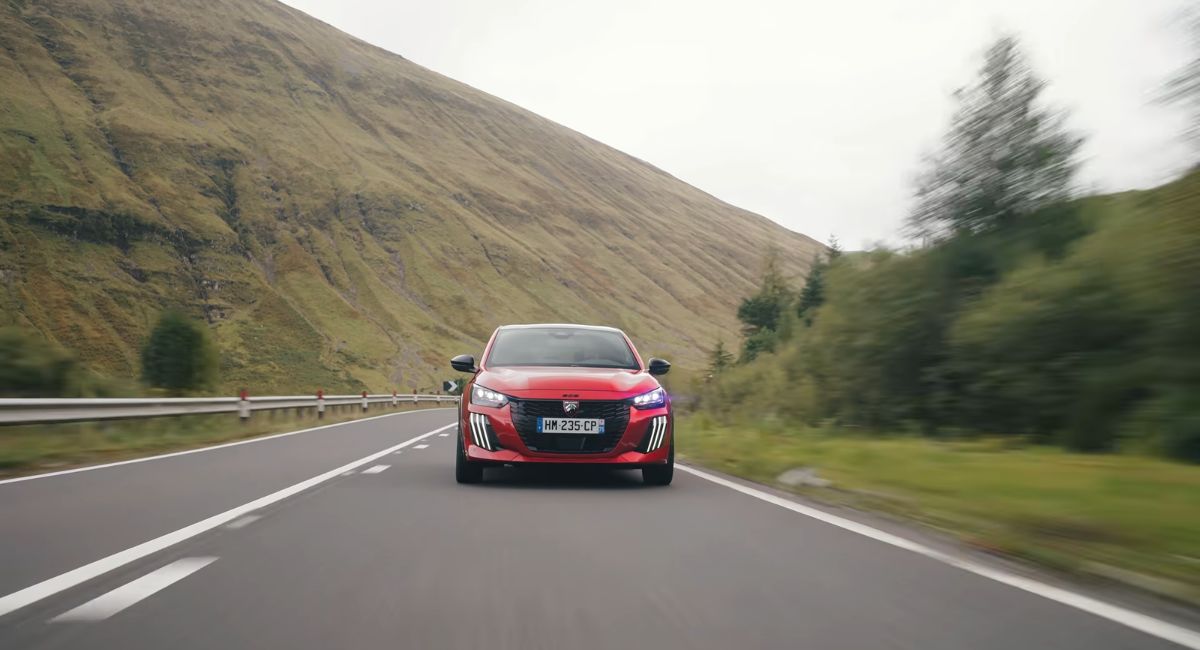
The details requiring refinement are familiar ones: steering feedback, brake feel, and how naturally the driver connects with the car.
Peugeot is remarkably close to getting the entire package right.
Battery Range Could Spoil a Good Sunday Drive
Here’s where the electric GTi faces its toughest practical challenge. Peugeot fits a 54 kWh battery with approximately 51 kWh of usable capacity. The maximum advertised WLTP range reaches 375 km (233 miles).
There’s an important catch concerning the tyres. The maximum figure applies to the Hankook Ventus S1 Evo3 option. Cars wearing the standard Michelin Pilot Sport 4S performance tyres have a lower official range of around 352 km (219 miles), according to RAC’s October 2026 review.
That’s already a meaningful reduction before enthusiastic driving enters the equation. Hard acceleration, repeated braking, high speeds, and demanding roads will consume considerably more energy.
Anyone buying the GTi specifically for weekend entertainment should prepare for shorter journeys between charging stops.
Maximum DC charging power is limited to 100 kW, with Peugeot quoting approximately 27 minutes for a 20–80% recharge under suitable conditions.
Acceptable for the class. Thoroughly ordinary by modern EV standards.
We’d particularly like to see how the battery cooling system performs during extended aggressive driving. Sustained power delivery and consistent performance matter in a car developed by Peugeot Sport.
One fast acceleration run tells us very little about how an electric hot hatchback behaves after twenty minutes of serious driving.
The Competition Has Become Ruthless
Peugeot has arrived in an electric performance market with several compelling alternatives.
The Alpine A290 offers a performance-focused interpretation of the Renault 5, complete with its own carefully developed chassis and unmistakable styling.
The MINI John Cooper Works Electric brings another historic performance name into the electric era.
Then there’s the Vauxhall Corsa GSE, which shares much of its mechanical hardware with the Peugeot. That relationship is particularly interesting.
The Corsa GSE has comparable performance and a slightly lower UK starting price. Peugeot needs its chassis calibration, steering characteristics, interior presentation, and GTi heritage to justify the difference.
And the price deserves scrutiny. The E-208 GTi starts at £34,995 in the UK, with orders having opened in July 2026. Peugeot announced a French starting price of €42,900.
That’s a substantial financial commitment for a small hatchback.
Purchase price is only part of the ownership equation. How much a vehicle retains after several years can matter just as much, as our Ford F-150 vs. Toyota Tundra resale value comparison demonstrates.
At that price, buyers should demand excellent steering, consistent brakes, a well-controlled ride, and enough battery performance to enjoy the car properly.
The exterior certainly makes a strong impression. Those 18-inch wheels inspired by the classic 205 GTi, widened arches, red details, and aggressive stance give the Peugeot a distinctive presence.
The cabin continues the theme with red carpeting, sports seats, and Peugeot’s compact i-Cockpit steering wheel.
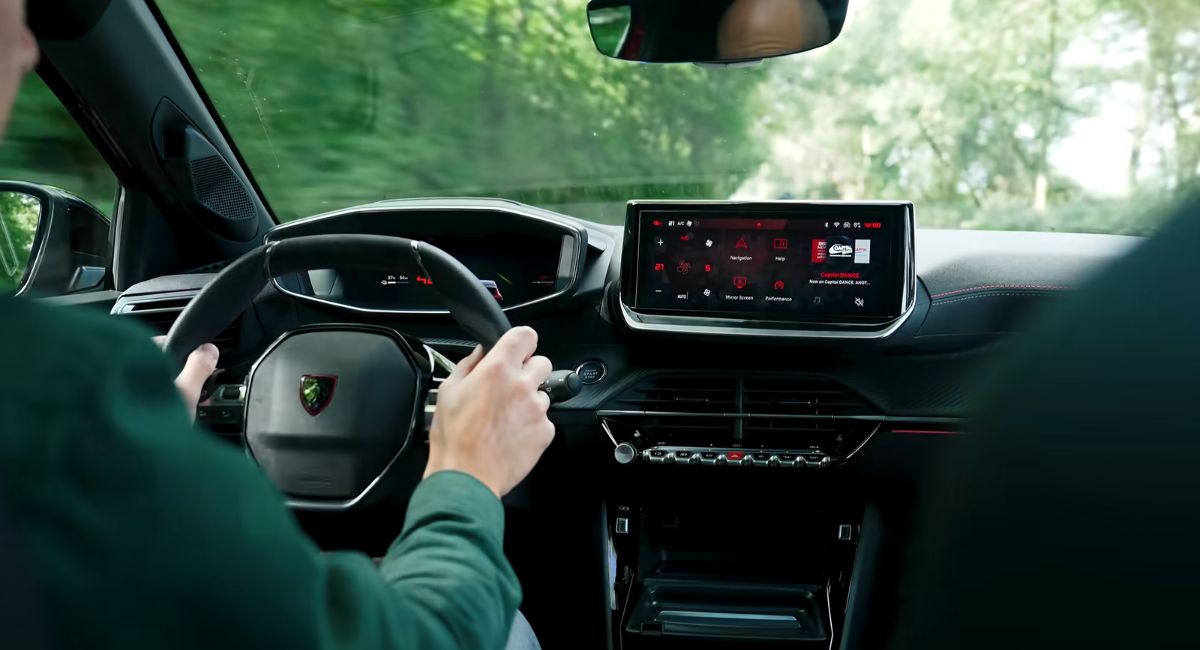
That unusual driving position remains a potential sticking point. We strongly recommend checking the seating position and instrument visibility before signing anything.
So, Does the Electric GTi Deserve Its Badge?
Our verdict is increasingly positive.
Peugeot has made some excellent engineering decisions. The mechanical differential, substantial brakes, revised suspension, and powerful electric motor give the E-208 GTi a convincing performance foundation.
The return of the GTi badge marks a new chapter for Peugeot’s performance cars. This short video from Gates Peugeot highlights the E-208 GTi’s electric powertrain, performance figures, and connection to the original 205 GTi.
Independent road tests reinforce the impression that the car delivers genuine entertainment.
The weight remains a considerable disadvantage, the charging specifications are unremarkable, and enthusiastic driving will punish the relatively small battery.
Those weaknesses deserve attention, particularly at the asking price.
Still, Peugeot has produced an electric hot hatchback with real chassis development behind it. That’s exactly the level of commitment the GTi name demands.
We expect the E-208 GTi to be exceptionally quick on winding roads, entertaining under acceleration, and sufficiently sharp to remind people why Peugeot once dominated the affordable hot hatchback conversation.
The original 205 GTi built a reputation that lasted four decades.
The E-208 GTi has earned the right to start building its own.