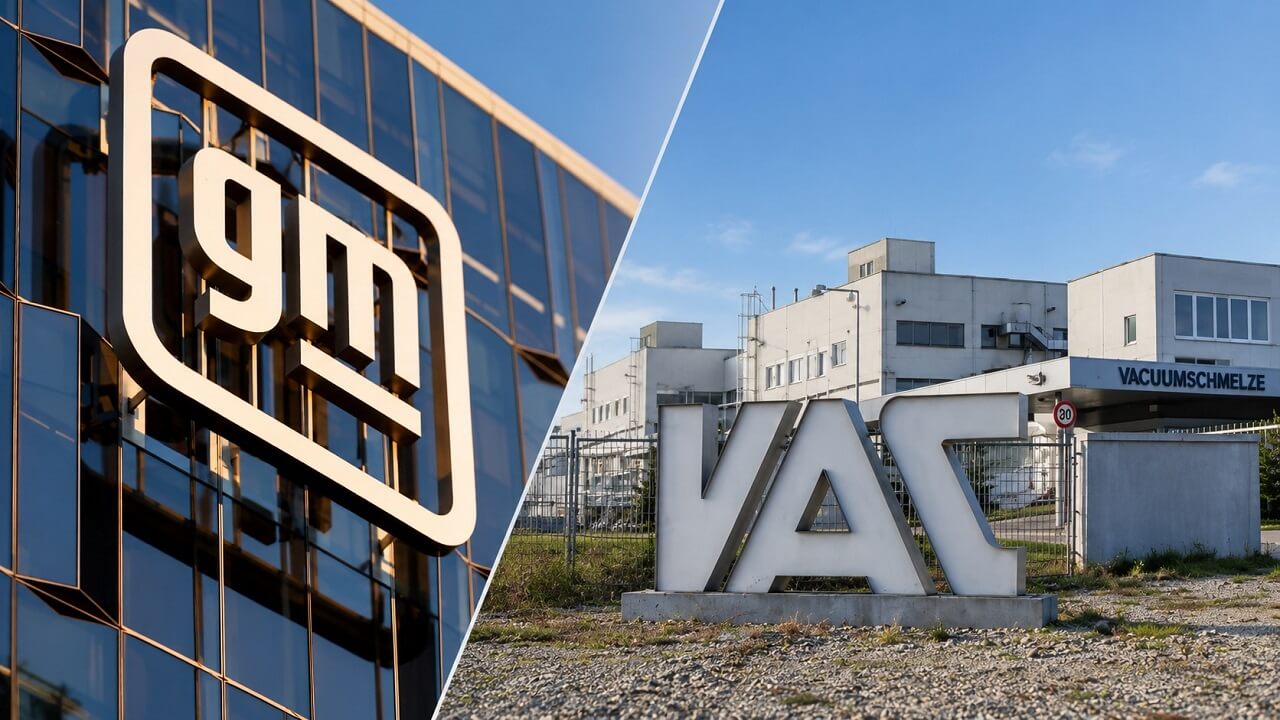
General Motors has walked away from a major supply agreement underpinning a $500 million American factory. The facility was built to manufacture critical components for the future of electric vehicles. Now its biggest customer is gone.
The factory, operated by German manufacturer Vacuumschmelze (VAC) in Sumter, South Carolina, was supposed to become an important piece of America’s domestic rare-earth magnet supply chain. General Motors was expected to purchase approximately 90% of its production.
Instead, GM terminated its long-term agreement, triggering an arbitration dispute that could have serious financial consequences for the manufacturer. And the timing is extraordinary.
GM terminated the agreement on July 1, 2026. The factory held its ceremonial opening just two weeks later, on July 15.
The machinery was installed. Production had already started. The manufacturing jobs were real.
America spent years demanding stronger domestic supply chains. GM just demonstrated how quickly those ambitions can unravel when corporate priorities change.
Half a Billion Dollars Riding on One Customer
The relationship between GM and VAC began with an ambitious plan to support American electric vehicle production.
In December 2021, the companies signed a memorandum of understanding. By January 2023, they had announced a binding agreement to supply rare-earth permanent magnets for GM’s expanding EV lineup.
According to VAC’s original announcement, the magnets were intended for vehicles including the Chevrolet Silverado EV, Blazer EV, Equinox EV, Cadillac Lyriq, GMC Sierra EV, and GMC Hummer EV. The commitment was supposed to last at least a decade.
VAC responded by investing heavily in American manufacturing capacity. The new Sumter facility represented approximately $500 million in investment and was designed to produce nearly 2,000 metric tons of permanent magnets annually. But one number makes the entire situation particularly alarming: 90%.
That was the approximate share of the factory’s production earmarked for General Motors, according to figures VAC CEO Erik Eschen previously provided to Reuters.
When a single customer is expected to purchase nine-tenths of a factory’s output, its purchasing commitment becomes fundamental to the entire investment.
Equipment purchases, production planning, staffing, and financing are organized around that expected demand. GM’s withdrawal has therefore created a problem far larger than a cancelled component order.
The Deal Was Dead Before the Grand Opening
Few details illustrate the contradiction better than the sequence of events.
- April 2026: A contractual dispute develops between GM and VAC over their supply arrangements.
- July 1: GM notifies VAC’s American subsidiary, e-VAC Magnetics, that it is terminating the supply agreement.
- July 7: e-VAC initiates arbitration proceedings challenging the termination.
- July 15: The Sumter manufacturing facility holds its official opening ceremony.
According to the company’s factory opening announcement, commercial production had already started in 2025. The facility employed 130 full-time manufacturing workers, with plans to expand employment to 300.
The ceremony celebrated American manufacturing, industrial investment, and efforts to reduce reliance on foreign suppliers.
Behind the celebration, the factory’s commercial foundation was already facing a serious legal challenge.
On October 22, Reuters identified General Motors as the customer behind the termination, citing regulatory documents and a person familiar with the matter. The arbitration remains unresolved, and the potential compensation has yet to be determined.
Still, the timing is impossible to ignore. An industrial project celebrated as a major American manufacturing achievement had already lost the agreement supporting most of its expected production.
Who Pays When the Factory Runs Empty?
The financial dispute centers on a particularly important issue for industrial suppliers: compensation for unused production capacity.
According to regulatory disclosures, the disagreement concerns how payments for underutilized capacity should be calculated under different contractual arrangements. Consider the economics.
A manufacturer invests hundreds of millions of dollars in a specialized factory because an automaker commits to purchasing components over many years. The supplier builds production lines, hires workers, and secures financing based on that anticipated business.
Then demand changes. The equipment remains. The operating costs remain. The financing obligations remain.
Someone must absorb the financial consequences when the expected orders disappear.
VAC argues that GM breached the agreement and is seeking arbitration relief, including payments it claims are owed over the remaining contractual term.
GM has not publicly explained its specific grounds for termination, and its legal liability has not been established.
In GM’s October regulatory filing, the company acknowledged the arbitration and stated that it could not reasonably estimate the potential material loss.
The eventual legal outcome will determine the parties’ contractual obligations. The commercial damage, however, is already evident.
GM’s EV Retreat Is Becoming Someone Else’s Problem
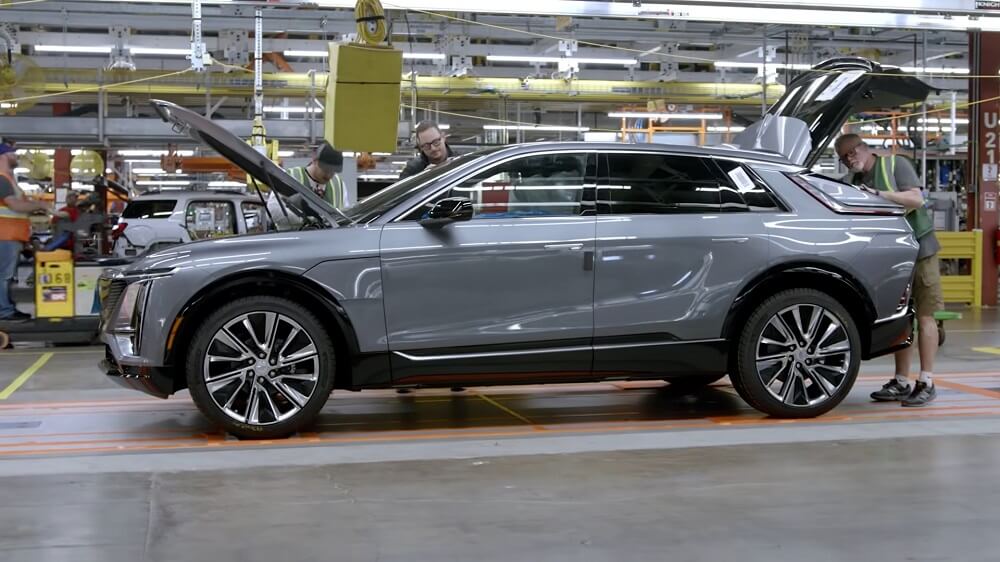
General Motors entered the agreement during a period of aggressive electric vehicle expansion.
Its plans called for new electric trucks, SUVs, and luxury models across multiple brands. Securing domestic magnet production was supposed to support that transition.
While GM is reassessing parts of its electric vehicle strategy, European manufacturers continue exploring new segments, including Peugeot’s E-208 GTi electric hot hatchback, which brings a historic performance badge into the EV era.
By 2026, the economic environment had changed dramatically.
Federal EV support had been reduced under the Trump administration, while slower-than-expected electric vehicle demand and profitability concerns prompted GM to reconsider major investments.
In January, the automaker disclosed a charge of approximately $6 billion related to unwinding parts of its EV investments.
Additional restructuring costs and supplier negotiations have followed as the company adjusts its electric vehicle strategy.
GM has a responsibility to respond when market conditions change. Continuing to manufacture unprofitable vehicles to defend outdated projections would be terrible management.
But the companies supplying automakers cannot simply erase investments made around earlier commitments.
Factories take years to develop. Specialized equipment cannot always be repurposed. A supplier with an enormous investment tied to one customer has far fewer options than the automaker making the purchasing decisions.
GM’s attempt to protect its own finances has exposed the financial vulnerability of the suppliers that trusted its long-term production strategy.
For manufacturers considering similar projects, that is a disturbing precedent.
America Wants Domestic Magnets. The Economics Say Otherwise.
Rare-earth permanent magnets are strategically important components. They are essential to many electric motors because they provide strong magnetic performance while remaining relatively compact.
The technology also supports aerospace equipment, defense systems, industrial machinery, and renewable energy applications.
China produces approximately 90% of the world’s permanent magnets, according to Reuters. That concentration has made supply security an increasingly important concern for American manufacturers and policymakers.
EXCLUSIVE: GM cancels deal with new US rare-earth magnet plant, documents say https://t.co/0gDwJxogFE
— Reuters Legal (@ReutersLegal) October 23, 2026
Building domestic production capacity is therefore a legitimate industrial priority. The Sumter factory represented precisely the kind of investment the United States has been encouraging: advanced manufacturing, specialized production capabilities, and reduced dependence on overseas supply chains.
Regulatory disclosures also describe a $94.1 million US Department of Defense funding agreement intended to support domestic magnet manufacturing capacity.
Public investment can help establish manufacturing facilities. Government contracts can provide additional demand.
But major industrial projects ultimately need dependable commercial customers.
America cannot build a resilient supply chain if the companies demanding domestic production abandon the commercial commitments supporting it.
The contradiction is glaring. American manufacturers want secure access to strategically important materials while retaining the freedom to make rapid purchasing changes when market conditions deteriorate.
Those competing priorities create enormous risk for the companies expected to finance the factories.
The Financial Fallout Is Already Spreading
The consequences are reaching well beyond the Sumter production lines. In June 2026, Energy Fuels agreed to acquire VAC in a transaction valued at approximately $1.9 billion.
Energy Fuels, historically associated with uranium production, sees rare-earth materials and magnets as an opportunity to expand into strategically important manufacturing. GM’s termination has complicated that acquisition.
According to Energy Fuels’ SEC disclosures, the transaction arrangements have been amended to address the customer dispute, potential settlement, debt repayments, and possible purchase-price adjustments.
The supplier’s financing arrangements have also come under pressure.
In September, e-VAC entered a forbearance agreement with lenders concerning specified defaults, including matters connected to the disputed contract termination.
The arrangement involves a $300 million US term loan.
Under the agreement, lenders temporarily refrained from exercising specified remedies, subject to certain conditions.
Additional financial support and shareholder arrangements have helped the broader VAC group plan for continued operations.
The factory has not been declared closed. Its long-term future remains uncertain. But the scale of the disruption is already remarkable.
A single terminated supply agreement has contributed to legal proceedings, financing complications, and uncertainty surrounding a multibillion-dollar corporate acquisition.
That is an extraordinary chain reaction for a manufacturing facility that only began commercial production in 2025.
Can the Factory Survive Without GM?
VAC still has options, but replacing General Motors will be extremely difficult. The manufacturer maintains an international customer base, and the Sumter facility has secured an agreement to supply rare-earth magnet blocks to the US Defense Logistics Agency.
Industrial and defense applications could provide opportunities beyond the automotive market. However, alternative customers cannot be expected to immediately replace a buyer originally projected to absorb approximately 90% of production.
New supply agreements take time. Different customers may require different technical specifications, production volumes, and pricing arrangements.
Even a strategically important manufacturing facility must operate within commercial reality.
The Sumter operation may ultimately succeed in diversifying its customer base. VAC may also obtain compensation through arbitration.
Neither possibility eliminates the enormous uncertainty created by the collapse of its original supply arrangement.
Industrial Promises Must Mean Something
General Motors may ultimately demonstrate that it had legitimate contractual grounds to terminate its agreement with VAC. The arbitration process will decide the disputed legal questions.
But the bigger industrial lesson extends far beyond the courtroom.
America wants factories capable of producing strategically important components domestically. Building those facilities requires expensive equipment, specialized employees, and years of preparation.
Those investments depend on confidence that future customers will honor commercially meaningful commitments.
General Motors helped create that confidence, then withdrew the agreement supporting it.
GM’s decision may ultimately prove financially advantageous for the automaker. For the supplier that invested hundreds of millions of dollars around the expected relationship, the consequences are already serious.
American automakers cannot demand domestic manufacturing capacity while treating the economic foundations of that capacity as disposable.
The next company asked to build a $500 million factory around a ten-year promise will have every reason to think twice.