
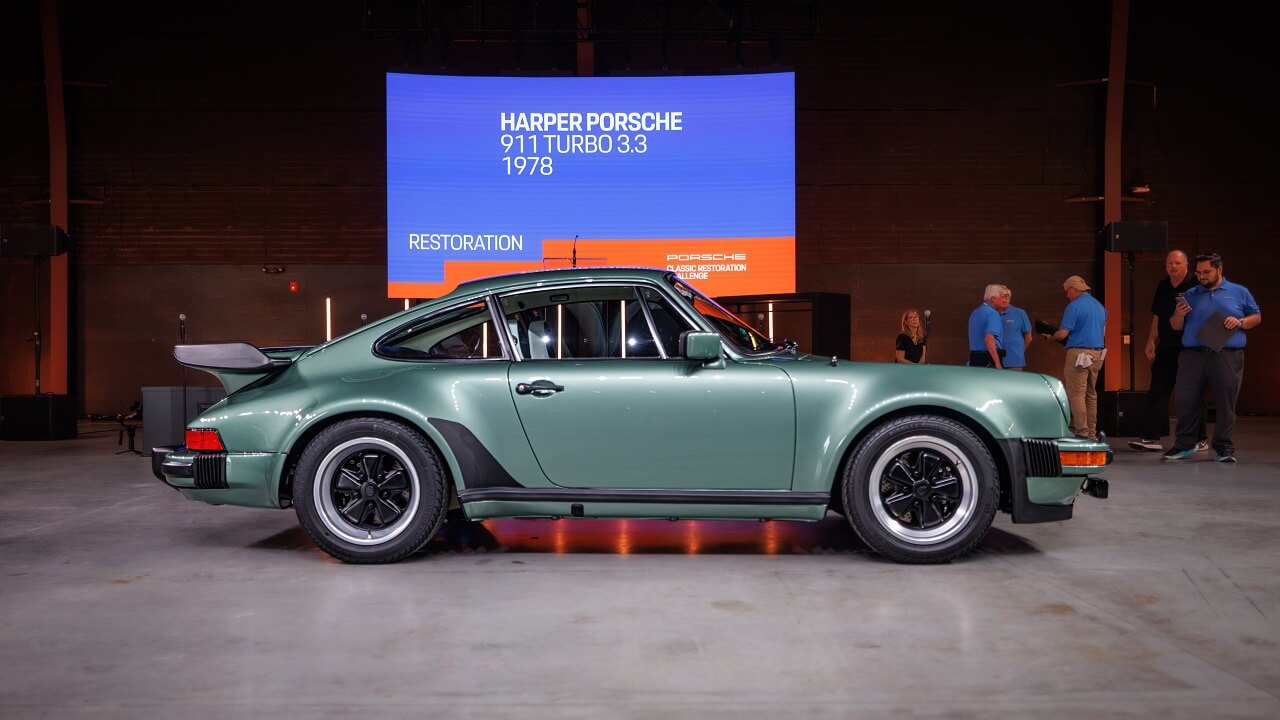
Somebody ordered a Porsche 911 Turbo in Buick green back in 1978. They paired it with white leather, pinstriped velour, and green shag carpeting. Nearly five decades later, that wonderfully eccentric decision has helped produce one of the most interesting Porsche restorations we’ve seen in years.
Harper Porsche of Knoxville, Tennessee, has won the 2026 Porsche Classic Restoration Challenge, taking both the Restoration National Champion and Grand National Champion titles with a meticulously rebuilt 1978 Porsche 911 Turbo 3.3.
The announcement came on October 16, following the national finals held alongside Luftgekühlt 12 in Fayetteville, Georgia. Sixty entries from Porsche Centers across the United States competed for recognition.
The judges made an excellent choice.
There’s something deeply satisfying about seeing an unusual, neglected classic receive this level of attention. Especially when the restoration team respects every gloriously strange decision made by its original owner.
Buick Paint on a Porsche? Absolutely.
The winning 911 Turbo wears Paint to Sample Buick Medium Green Poly metallic, a General Motors color chosen through Porsche’s special-order system.
Its original specification also included white leather, black-and-white pinstripe velour upholstery, and green shag carpeting. Even the air-conditioning hoses featured distinctive red woven coverings.
Yes, green shag carpeting. In a turbocharged Porsche.
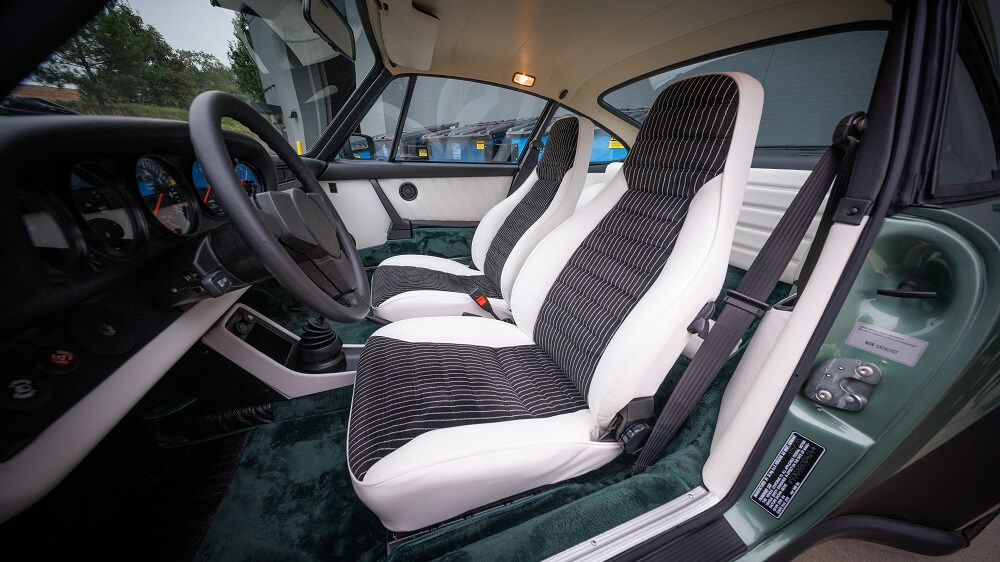
The car was an early example of Porsche’s Sonderwunsch philosophy, which translates to “special wishes.” Wealthy customers could commission unusual combinations of colors, materials, and equipment that gave their cars distinctive identities.
Today’s Porsche personalization programs have become enormous commercial operations. The historical roots of that business are sitting right here, wrapped in metallic Buick paint.
And frankly, this particular specification has considerably more personality than the endless parade of predictable black, silver, and gray performance cars.
The genius of Harper Porsche’s work lies in respecting the original commission. As Octane’s detailed restoration report explains, the team used factory records, Porsche Production Specifications documentation, and period references to reconstruct the car accurately.
That research extended to commissioning replacement air-conditioning hoses that reproduced the appearance of the original red woven components.
Such details require patience, money, and a willingness to obsess over things that most people will never notice.
They’re precisely the details that separate exceptional restorations from expensive cosmetic makeovers.
Florida Nearly Finished the Job
Before its transformation, the 1978 Turbo had spent years deteriorating under the Florida sun.
The damage was extensive enough to require a comprehensive restoration. Rust had attacked the bodywork, and the mechanical components needed serious attention.
Harper Porsche faced an enormous amount of work.
According to Porsche’s official announcement, the restoration included extensive corrosion repairs, a bare-metal repaint, and complete rebuilds of the engine, transmission, and turbocharger.
The team’s work went considerably deeper than the headline description suggests.
The restoration included:
- Bodywork: Extensive rust repair, followed by a complete bare-metal repaint inside and outside the body.
- Engine: A full rebuild of the turbocharged flat-six, beginning with its bare crankcase.
- Drivetrain: Rebuilding the original turbocharger and Type 930 four-speed transmission.
- Suspension and brakes: Refurbished running gear, including green Bilstein dampers and renewed braking components.
- Wheels and tires: Refinished Fuchs wheels fitted with Porsche-approved Pirelli P7 tires.
- Interior and finishing details: Reconstruction of the unusual original upholstery, materials, and special-order features.
Every major part of the vehicle demanded attention.
And that makes the victory particularly impressive.
Rebuilding a 930 Turbo is demanding enough when the body is solid and its components remain in working order. Bringing a heavily deteriorated example back to its documented factory specification requires expertise across several disciplines.
Body specialists, mechanical technicians, interior craftspeople, and Porsche historians all have important roles to play.
The finished car demonstrates what happens when that expertise comes together around a single objective.
The 1978 Turbo Was Already a Monster
The choice of a 1978 Turbo adds another dimension to this restoration.
That model year marked a major technical development for Porsche’s original 911 Turbo, internally designated the 930.
Porsche enlarged the turbocharged flat-six from 3.0 to 3.3 liters and introduced an intercooler beneath the enlarged rear spoiler.
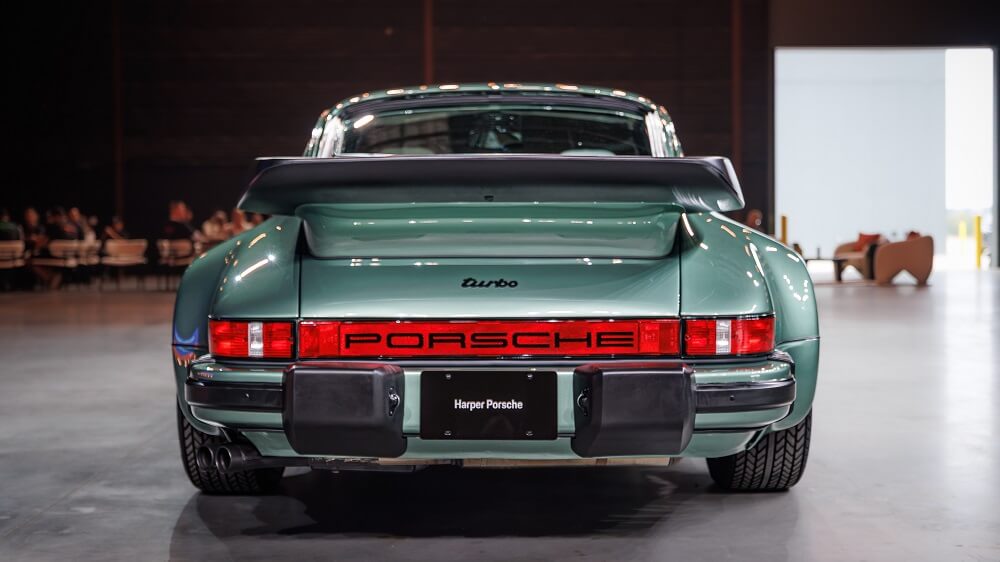
The updated European-specification engine produced 300 PS (221 kW) and 412 Nm of torque.
According to Porsche’s historical technical documentation, the improved Turbo could reach 260 km/h. Its braking system also drew technology from the legendary Porsche 917 racing program.
For a road car arriving in 1978, those figures were outrageous.
Then there was the driving experience.
Early 911 Turbos developed a reputation for substantial turbo lag, sudden power delivery, and handling characteristics that demanded concentration. Their rear-engine configuration and explosive performance rewarded experienced drivers who understood the machinery.
The four-speed manual transmission was part of that character.
Modern turbocharged sports cars deliver their performance with extraordinary precision. The original 930 demands far greater involvement from its driver.
Restoring the engine, original turbocharger, and transmission preserves the mechanical experience that made these cars famous.
That matters enormously. A 930 Turbo deserves to retain its distinctive personality.
Two Other Porsches Took Home Major Awards
Harper Porsche secured the competition’s highest honor, although the remaining national champions deserve recognition.
The contest featured three categories with different approaches to classic-car ownership.
Gaudin Porsche of Las Vegas won the Preservation National Champion award with a 1996 Porsche 911 Turbo.
That 993-generation Turbo had accumulated extensive aftermarket modifications over the years. The restoration team reversed those changes, reinstated factory equipment, and preserved original finishes wherever possible.
A Porsche Classic Technical Certificate helped verify the car’s original specification.
It’s an approach we strongly support. Original materials and finishes carry historical value, and preserving surviving components requires considerable judgment.
What makes a vehicle valuable changes considerably with age and purpose. While classic Porsches reward originality and careful preservation, everyday vehicles face a different financial test. Our Ford F-150 vs. Toyota Tundra comparison shows how dramatically resale values can differ after just five years.
Meanwhile, Porsche Orlando won the Individualization National Champion and People’s Choice awards with a 1997 Porsche 911 Carrera Coupe.
View this post on Instagram
Originally finished in Pastel Yellow, the Carrera underwent a dramatic transformation into a personalized, RS-inspired machine.
The project involved stripping the car to its bare shell, developing bespoke exterior and interior details, and fitting a high-revving 4.0-liter engine.
It also earned the most votes from enthusiasts attending Luftgekühlt 12 at Town at Trilith.
The three winners represented very different philosophies: complete restoration, careful preservation, and extensive individualization.
Their results demonstrate just how much can be achieved with Porsche’s older platforms when skilled people are given the resources to work properly.
Porsche’s Restoration Program Is Worth Taking Seriously
The Classic Restoration Challenge is now in its sixth year, and its importance extends well beyond the trophies.
Porsche says its Classic operation provides access to nearly 85,000 genuine parts for heritage models.
View this post on Instagram
That’s a substantial commitment to keeping older vehicles operational.
The competition also provides a platform for dealership technicians to demonstrate capabilities that rarely receive attention during ordinary vehicle servicing.
Rebuilding a four-decade-old turbocharger or recreating a factory-special interior requires specialized knowledge. Those skills have to be developed, practiced, and passed along.
Classic Porsche owners benefit when dealerships continue investing in them.
There is also a commercial reality here. Porsche’s heritage business benefits from the brand’s enormous collector following, and its restoration competition serves as excellent publicity.
Fair enough. The publicity is earned when projects demonstrate this level of craftsmanship.
We would happily see more manufacturers commit serious technical resources to their historic vehicles.
The Green Porsche Deserved to Win
There is a particular irony in the winning car’s history.
Its original owner ordered an expensive German sports car with an American paint color, an extravagant interior, and enough visual confidence to dominate almost any parking lot.
Time and neglect eventually reduced that extraordinary machine to a major restoration project.
Harper Porsche brought it back through extensive mechanical work, skilled metal repairs, historical research, and painstaking attention to its original specification.
The result is a 1978 911 Turbo that celebrates the outrageous taste of its first owner and the engineering that made the 930 a legend.
Our verdict? An inspired winner.
The classic-car industry sometimes takes itself far too seriously, particularly when originality becomes an excuse for making every valuable car look identical.
This green Turbo is a reminder that automotive history includes eccentric people with expensive tastes and wonderful ideas.
Porsche’s restoration team had the good sense to preserve theirs.
Also read